A fall is rarely just a fall. It is the event that turns someone who was managing at home into someone who is not — through a fractured hip, a head injury, or simply the fear that follows, which shrinks a person’s world faster than any injury.
The useful question is not whether falls are serious. It is which prevention efforts are actually supported by evidence, because a great deal of well-meaning advice in this area is not.
What the evidence supports
Three interventions have real backing for community-dwelling older adults.
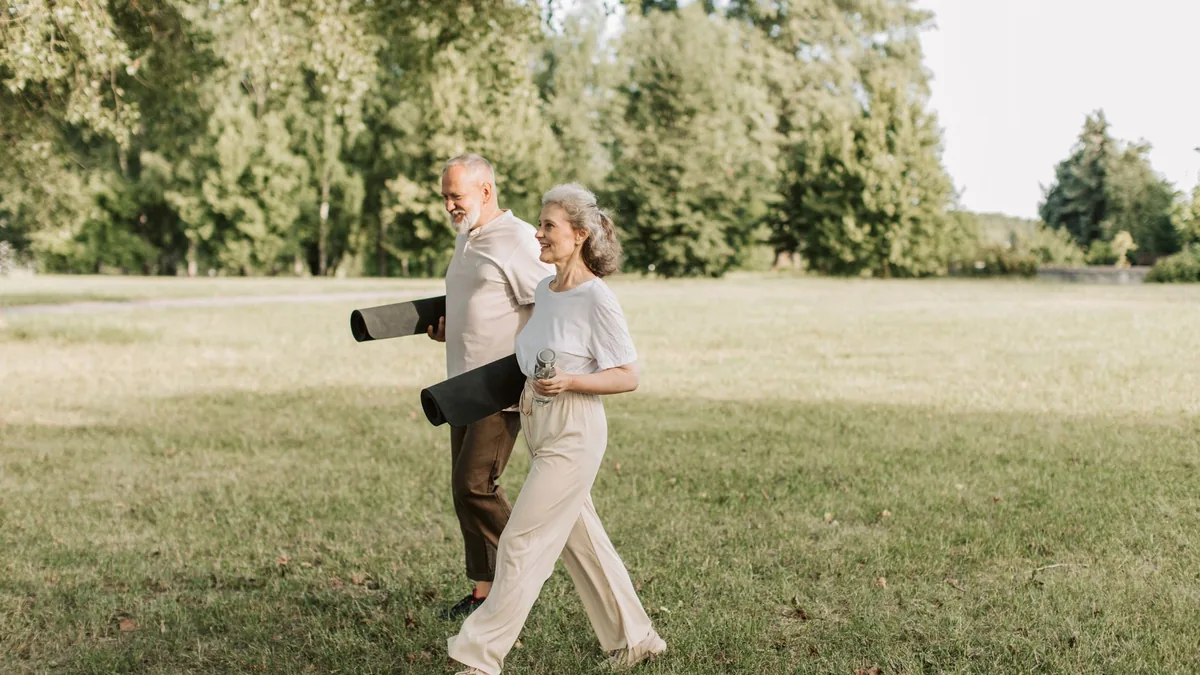
- Exercise. The U.S. Preventive Services Task Force recommends exercise interventions for adults 65 and older who are at increased risk of falling. This is the strongest single recommendation in the area — stronger than anything you can buy.
- Removing hazards from the home. Covered in detail below; the effect is larger than most people expect.
- Reviewing the medication list. Blood-pressure drops on standing are a leading cause of falls, and medications are the leading contributor to those drops. The full explanation is here.
The USPSTF also takes a selective, individualized position on broader multifactorial programs — worthwhile for some people, not a blanket recommendation.
And what it does not
Vitamin D does not prevent falls. The USPSTF recommends against vitamin D supplementation for fall prevention in community-dwelling adults 65 and older — a position it first issued in 2018 and carried into its 2024 update. Some trials of high intermittent doses found more falls, not fewer. How the evidence moved →
The home itself: better evidence than most people realize
Decluttering sounds like the least medical intervention imaginable. The evidence says otherwise.
A Cochrane systematic review of environmental interventions for preventing falls found that reducing hazards around the home lowers the overall rate of falls by roughly 26 percent. In people at higher risk — those who have fallen in the past year, been recently hospitalized, or need support with daily activities — removing environmental hazards reduced falls by around 38 percent.
Read that middle clause again: need support with daily activities. That is a description of nearly everyone receiving Consumer Directed Services or home health. The intervention with some of the best evidence in this field works better in this population than in the general older population — and it is practical, unglamorous work rather than anything clinical.
The reviews also found home safety interventions to be more effective when delivered by an occupational therapist, with reported reductions of around 39 percent among high-risk community-dwelling older adults. An occupational therapist assessing the actual home is a different exercise from a general checklist, and the CDC includes referral to occupational therapy in its own fall-prevention algorithm.
Occupational therapy is one of the home health services we provide →
Room by room
Walkways and floors
- Clear a continuous path through every room actually used
- Remove or securely tape down loose rugs — throw rugs are the single most common indoor trip hazard
- Route electrical and phone cords against walls, never across a path
- Wipe spills immediately; a wet kitchen floor is a fall waiting
- Keep pets’ beds and bowls out of walking routes
Bathroom
- Non-slip mat inside the tub or shower
- Non-slip bath mat outside it, or none at all — never a loose towel
- Everything used daily within reach without stretching or bending
- A raised toilet seat or shower chair if standing is unsteady
- Grab bars fitted into studs — never a towel rail, which will pull out of the wall under load
Lighting
- A lit route from bed to bathroom — most night falls happen on it
- Motion-sensor night lights beat remembering a switch
- A lamp reachable from the bed without getting up
- Light both the top and bottom of any stairs
- Replace dim bulbs; older eyes need substantially more light
Stairs, bedroom, kitchen
- Handrails on both sides of stairs where possible, and never anything stored on the treads
- Bed at a height where feet reach the floor with knees bent
- Everyday items between waist and shoulder height — no step stools, no reaching overhead
- A sturdy chair with arms to push up from
- Footwear that fits and has a back — not loose slippers or socks
Where an attendant’s role ends
This distinction matters, and it is one families get wrong in good faith.
Within the care plan
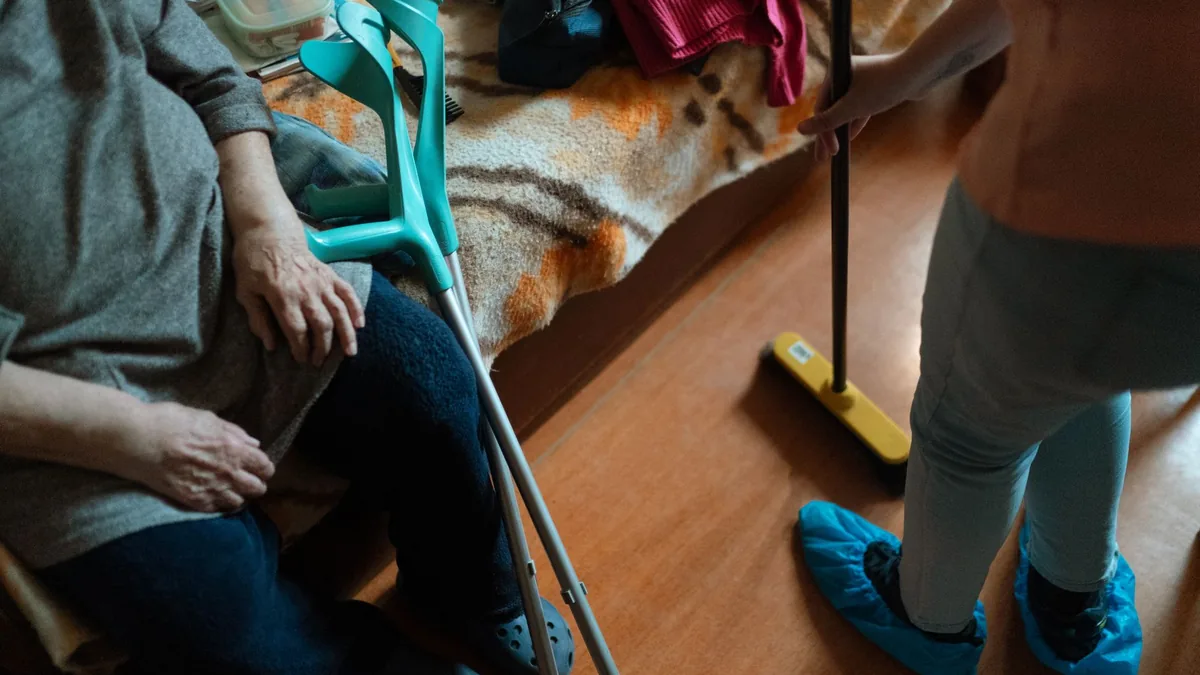
- Keeping walkways clear
- Light housekeeping in the areas used
- Wiping spills
- Moving a cord or a rug out of a path
- Turning lights on before the person moves
- Reporting hazards to the family
- Helping the person put on proper footwear
Not an attendant’s job
- Installing grab bars, rails or ramps
- Any structural or electrical work
- Deciding what furniture gets removed
- Buying equipment on the person’s behalf
- Assessing the home clinically
- Physically lifting someone who has fallen
Grab bars must be anchored into studs or backed by proper hardware. A bar screwed into plasterboard will come away from the wall exactly when someone’s full weight is on it, converting a steadying handhold into a fall with a heavy object attached. This is a job for someone competent, not a well-meaning relative with a drill.
Screening: what to raise with the clinician
The CDC’s STEADI framework — Stopping Elderly Accidents, Deaths and Injuries — organizes fall prevention into three steps: screen, assess, intervene. It implements the American and British Geriatrics Societies’ clinical practice guideline, and it is what a well-run primary care practice should already be doing.
Three questions drive the screening, and a family member or attendant can answer all three:
- Has this person fallen in the past year?
- Do they feel unsteady when standing or walking?
- Do they worry about falling?
A yes to any of them is a reason to ask for a fall risk assessment. Add what you have actually observed — when it happens, what they were doing, how often — and ask specifically whether any medication could be contributing.
If someone falls
- Do not rush to lift them. Check for injury first — a hip or spinal fracture can be made much worse by being moved.
- Call 911 for any suspected fracture, head injury, loss of consciousness, or if they cannot get up.
- If they can get up, let them do it slowly and in stages — roll to the side, onto hands and knees, up to a sturdy chair.
- Report every fall, including ones with no injury. A fall without injury is the warning; the next one may not be.
- Write down the circumstances — time of day, what they were doing, whether they had just stood up. That detail is what lets a clinician distinguish a trip hazard from a medication problem.
Anyone on a blood thinner who hits their head needs medical assessment even if they seem completely fine. Bleeding inside the skull can develop slowly over hours or days.
What this means for day-to-day care. The most valuable thing about a personal care attendant in fall prevention is not strength or training — it is repetition. Being in the same home every morning means noticing that the path to the bathroom has narrowed again, that the night light has burned out, that the slippers have gone loose, or that the unsteadiness on standing started around the time of a medication change. None of that is visible in a clinic, and all of it is worth reporting.
Sources
- U.S. Preventive Services Task Force — Falls prevention in community-dwelling older adults: interventions (2024)
- Clemson L et al., Cochrane Database of Systematic Reviews 2023 — Environmental interventions for preventing falls in older people living in the community
- Cochrane — Reducing trip hazards and decluttering can prevent falls among older people living at home
- CDC — About STEADI: Stopping Elderly Accidents, Deaths & Injuries
- CDC — STEADI in outpatient care: screen, assess, intervene
- CDC — Older adult fall data
- National Council on Aging — Falls prevention
This article is general information, not medical advice. It describes published research; it is not a recommendation for you or the person you care for. Never start, stop or change a prescribed medication because of something you read here — talk to the prescribing clinician first. Communicare Elite provides non-medical personal care through Missouri’s Consumer Directed Services program and does not provide medical advice or treatment.