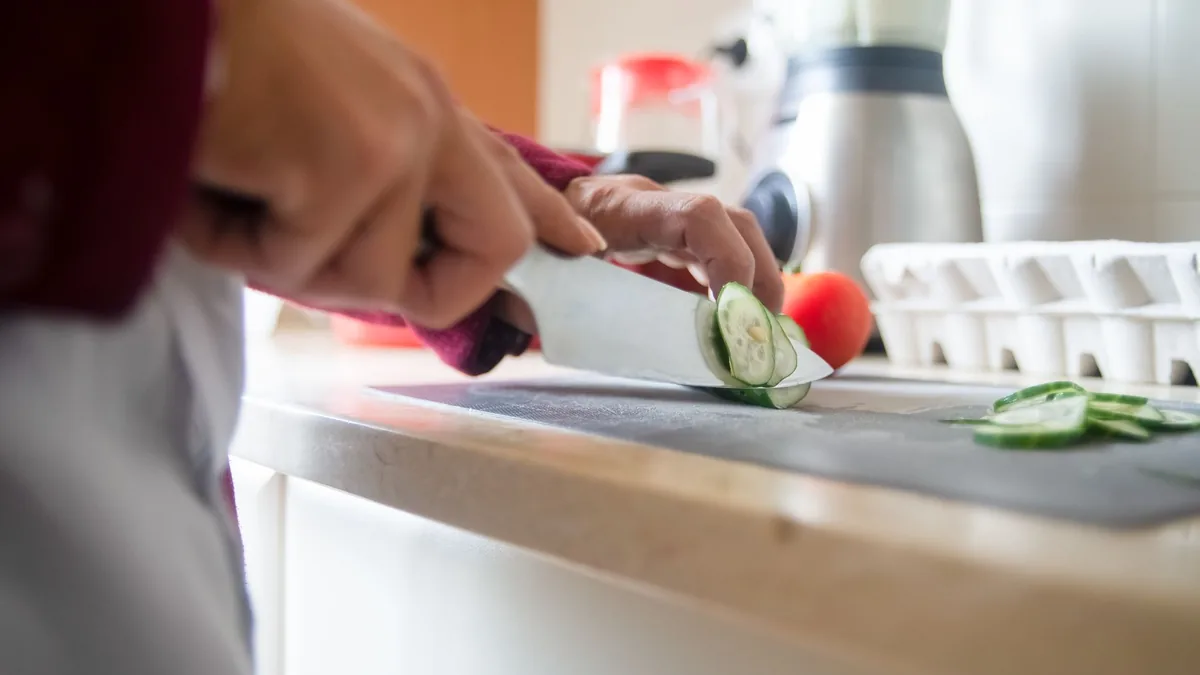
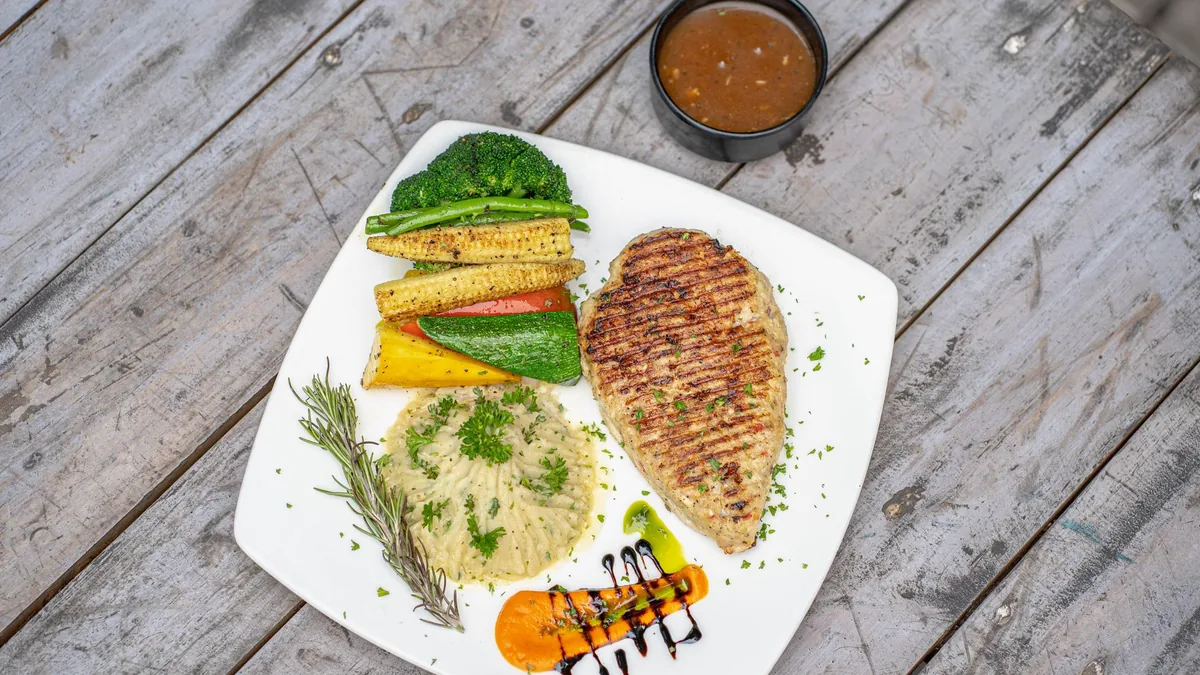
Meal preparation, grocery shopping and help with eating are ordinary tasks in a care plan. They are also, for a homebound person, close to total control over what enters their body. That makes the person doing the cooking one of the most consequential people in their care — a fact that rarely gets said out loud.
Older adults need more protein than the standard number
The familiar recommendation of 0.8 grams of protein per kilogram of body weight per day was not developed for older adults, and is now widely considered insufficient for them.
The PROT-AGE Study Group and the ESPEN Expert Group recommend 1.0 to 1.2 g/kg per day for healthy older adults, rising to 1.2 to 1.5 g/kg for those with chronic illness or sarcopenia — age-related muscle loss.
The reason is a phenomenon called anabolic resistance. An older body extracts less muscle-building benefit from the same amount of protein, so it needs more of it, and needs a meaningful amount at each meal rather than concentrated in one. PROT-AGE suggests roughly 25–30 grams of protein per meal.
In practice this is the difference between toast for breakfast and eggs for breakfast. A homebound person eating tea and toast, a biscuit at lunch and a small supper may be nowhere near their requirement while appearing to eat three times a day. Muscle lost this way is the same muscle that gets someone off a toilet and out of a chair. The falls connection is direct.
Practical sources that survive poor appetite and poor dentition: eggs, Greek yogurt, cottage cheese, tinned fish, minced meat, beans and lentils, milk used instead of water in soups and porridge, and peanut butter.
The hydration problem is not forgetfulness
Dehydration is common in older adults — US prevalence estimates run from roughly 17 to 28 percent, and considerably higher under broader definitions. Two physiological changes drive it: the sensation of thirst declines with age, so the usual prompt to drink weakens, and the kidneys become less able to concentrate urine, so more water is lost.
The consequences are not subtle. Even mild dehydration contributes to confusion, fatigue, dizziness and poor concentration — and in someone with dementia, mild dehydration can produce a visible worsening of thinking that families understandably mistake for the disease progressing. It also raises the risk of urinary tract infections, falls and hospitalization.
The loop nobody talks about
Many homebound older adults are not forgetting to drink. They are drinking less on purpose.
If getting to the bathroom is slow, painful, undignified or frightening — particularly at night, in the dark, with poor balance — then drinking less is a perfectly rational way to reduce the number of trips. People rarely volunteer this, because it sounds like complaining about continence.
The result is a closed loop: less fluid, more concentrated urine, more urinary tract infections and constipation, more confusion — and the night-time urgency that does eventually come is now happening to someone dehydrated, dizzy and unsteady. The strategy adopted to avoid a fall becomes a cause of one.
This loop is breakable, and it is broken from the bathroom end, not the glass end. Lighting the route, clearing it, putting a commode within reach at night, sorting out footwear, and making the trip feel safe does more for hydration than any amount of reminding someone to drink.
Why appetite disappears — and what is treatable
Poor appetite in an older adult is a symptom, not a personality trait. Most of the common causes are fixable, which is why they are worth reporting rather than accommodating.
| Cause | What it looks like | What helps |
|---|---|---|
| Mouth pain or poor dentures | Avoiding meat, bread and anything that needs chewing | Dental review — oral health matters more than it looks |
| Medications | Dry mouth, metallic taste, nausea, early fullness | Medication review — how to ask for one |
| Swallowing difficulty | Coughing during meals, a wet voice afterwards, avoiding thin liquids | Speech therapy assessment — a home health service |
| Depression or isolation | Eating alone, loss of interest in food once enjoyed | Report it; eating with company reliably increases intake |
| Constipation | Persistent fullness, reduced appetite | Fluid, fiber and mobility; report if persistent |
| Simply being unable to cook | A freezer of ready meals, or nothing at all | Meal preparation as an authorized care plan task |
Coughing or choking during meals, or a wet gurgling voice afterwards, is not a quirk — it can indicate aspiration, where food or fluid enters the airway. It is a leading route to pneumonia in older adults. Report it the same day.
Unintentional weight loss is the alarm
Of everything in this article, this is the single most important signal and the one most often noticed first by whoever does the laundry.
Unintentional weight loss in an older adult is associated with cancer, depression, dementia, swallowing problems, dental pain, medication side effects and simple inability to shop or cook — and it independently predicts mortality. It is never a diet success.
- Clothes and rings becoming loose
- A belt moving in a notch
- Meals consistently left unfinished
- Food going out of date in the fridge
- Skin that tents when pinched, a dry mouth, dark or strong-smelling urine
- New confusion in someone whose thinking was previously stable
Clinicians screen for this formally using the Mini Nutritional Assessment, a validated tool for adults 65 and over with a short screening form that takes minutes. Asking for it by name is a reasonable request at an appointment.
Why weight in later life is more complicated than it looks →
What actually works in the kitchen
Food
- Protein at every meal, not just dinner
- Small, frequent meals beat three large ones
- Fortify rather than enlarge — milk powder into soup, cheese into potato, butter into vegetables
- Frozen vegetables are as nutritious as fresh, never spoil and need no chopping
- Cook food they actually like; perfect food left uneaten helps nobody
- Match the texture to what they can chew and swallow safely
Fluids
- A filled glass within reach, refilled without being asked
- Offer at every visit rather than waiting for thirst
- It does not have to be water — tea, milk, soup, jelly and fruit all count
- Front-load fluids earlier in the day if night trips are the worry
- A lightweight cup with a handle if grip is poor
- Watch intake more closely in hot weather and during any illness
Some people are on a deliberate fluid restriction — commonly in heart failure or advanced kidney disease — and pushing fluids on them can be dangerous. If there is any indication of a fluid limit, follow the care plan and ask before encouraging more.
Where to get help beyond the kitchen
- Meal preparation and grocery shopping are authorized tasks in a Consumer Directed Services care plan. If they are not in the plan and the need is real, raise it — plans can be reassessed. Covered tasks.
- Home-delivered meal programs operate across the St. Louis area for older adults who qualify.
- A medical social worker can identify and access food assistance as part of home health. What that covers.
- Speech therapy assesses and treats swallowing problems at home. Therapy services.
What this means for day-to-day care. You are likely to notice this before anyone else does, because you see what comes back on the plate and what is still in the fridge next week. Report weight loss, coughing at meals, and refusal of food or fluids — and report them as observations with dates rather than impressions. Never put someone you care for on a diet, never withhold food or fluid as leverage, and never push fluids on a person who may be under a medical fluid restriction.
Sources
- Bauer J et al. / PROT-AGE Study Group and ESPEN Expert Group — Protein intake and exercise for optimal muscle function with aging, Clinical Nutrition
- Clinical Nutrition — Low-intake dehydration prevalence in non-hospitalised older adults: systematic review and meta-analysis
- StatPearls / NIH — Adult dehydration
- Nestlé Nutrition Institute — Mini Nutritional Assessment (MNA)
- Guigoz Y — Identifying the elderly at risk for malnutrition: the Mini Nutritional Assessment
- National Institute on Aging — Healthy eating, nutrition and diet
This article is general information, not medical advice. It describes published research; it is not a recommendation for you or the person you care for. Never start, stop or change a prescribed medication because of something you read here — talk to the prescribing clinician first. Communicare Elite provides non-medical personal care through Missouri’s Consumer Directed Services program and does not provide medical advice or treatment.